Anti Static Steel Cord Rubber Conveyor Belt – High-Tensile
Anti-static steel cords that don’t spark drama in hazardous plants
When people ask what’s changed in bulk handling, I point to one quiet revolution: belts that don’t just pull weight—they manage risk. The
Anti Static Steel Cord Rubber Conveyor Belt is a good example. It’s built for heavy work, but it’s also engineered to keep stray charge from becoming a spark in a dusty tunnel or coal bunker. Honestly, that matters more than people think.
Origin: No. 13 Gongqiang Road, Nangong Economic Development Zone, Xingtai City, Hebei Province. I visited a similar line in Hebei a while back—clean calenders, tight curing control, and techs who know their cord pitch from memory. That shows in the field results.
What it is (and why plants choose it)
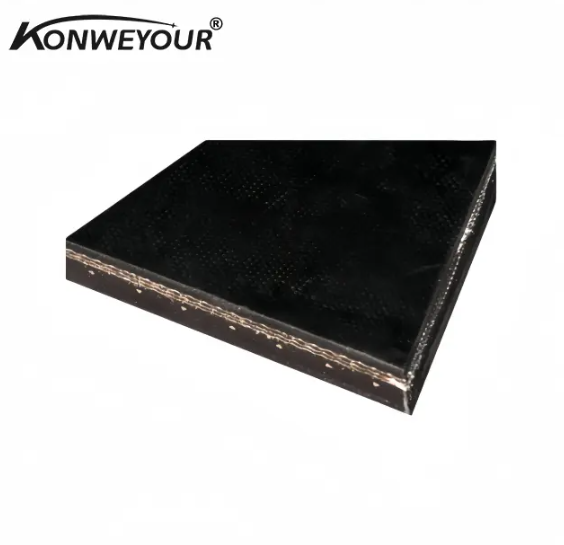
The Anti Static Steel Cord Rubber Conveyor Belt combines high-tensile steel cords, a low-resistance rubber matrix, and flame-retardant chemistry. In fact, many customers say they notice fewer nuisance shutdowns from static trips. It seems that consistent surface resistivity (not just on day one) is the differentiator.
Typical 애플리케이션s
- Underground and surface coal mining, coal prep plants, power stations (dust-prone zones)
- Grain terminals and fertilizer plants where ignition sources are a no-go
- Steel mills, cement, quarries—long-센터 conveyors requiring high tensile strength
Process flow (how it’s made)
- Materials: brass-coated high-carbon steel cords; anti-static, flame-retardant rubber (carbon black + conductive fillers); skim/bonding layers.
- Calendering: precision coating of cords; cord pitch set at ≈ 6–12 mm depending on rating.
- Building: top/bottom cover rubber applied; edge sealing for moisture ingress control.
- Vulcanization: controlled temperature/pressure; tracking coupons for cure index.
- Testing: ISO 284 resistance test, NDT for cord integrity, adhesion tests, drum friction, abrasion (ISO 4649), and splice peel strength.
Key specs (typical values)
| Parameter |
Typical |
Notes |
|---|
| Tensile strength |
ST630–ST5000 |
ISO 15236-1 수업es |
| Cord pitch |
≈ 7–12 mm |
Depends on ST rating |
| Covers |
DIN Y/X/W |
Abrasion resistance per ISO 4649 |
| Antistatic (R) |
≤ 3.0 × 10⁸ Ω |
ISO 284 compliant |
| Flame 수업 |
EN 14973 B/C (option) |
Underground approved variants |
| Abrasion loss |
≈ 70–120 mm³ |
Real-world use may vary |
Field test snapshot (coal, 2.2 m/s, 1,200 mm width): average surface resistance 6.5×10⁶ Ω after 9 months; splice elongation
Vendor comparison (condensed)
| Vendor |
Antistatic (Ω) |
Width range |
Lead time |
Warranty |
|---|
| JT Conveyor (this 제품) |
≈ 106–108 |
500–2,400 mm |
3–6 weeks |
12–24 months |
| Vendor A (global) |
≈ 107–109 |
650–2,000 mm |
6–9 weeks |
12 months |
| Vendor B (regional) |
≈ 108–1010 |
800–1,600 mm |
4–8 weeks |
6–12 months |
Customization
- ST rating: ST630 to ST5000; cord diameter and pitch matched to pulley set
- Covers: abrasion (Y), cut/impact (X/W), heat/oil options available
- Flame-retardant packages: EN 14973 B/C; antistatic to ISO 284 across 모두 grades
- Hot/cold splicing kits, rip-detection loop embedding, edge sealing choices
사례 notes (real-world)
Power plant retrofit, Southeast Asia: replaced fabric belts on a 1.8 km line with Anti Static Steel Cord Rubber Conveyor Belt. Downtime cut by ~22% (mostly fewer splice issues), dust ignition risk auditors signed off after ISO 284 spot checks. Operator feedback: “less belt drift, quieter carryback cleanup.” Sm모두 thing, big impact.
Compliance and testing
인증s available: ISO 9001, CE; antistatic verified per ISO 284; flame retardancy per EN 14973; steel-cord construction per ISO 15236. Abrasion per ISO 4649. Some sites also ask for MSHA-equivalent testing—ask for the dossier, it’s worth the read.
References:
- ISO 284:2012 — Conveyor belts — Electrical conductivity.
- ISO 15236-1:2016 — Steel cord conveyor belts — Design, dimensions, requirements.
- EN 14973:2015 — Conveyor belts for use in underground inst모두ations — Fire safety requirements.
- ISO 4649:2017 — Rubber, vulcanized or thermoplastic — Determination of abrasion resistance.
- DIN 22131-1:2007 — Steel cord conveyor belts for hoisting and conveying — Part 1.